Showing posts with label Scavenger Hunt. Show all posts

Sunday, 12 May 2019

Shuk Dash

Remember the Yemin Moshe Windmill Dash and the Jerusalem, Gush Etzion and Nachalot Scavenger Hunts that I have participated in over the years? Well, Tali Kaplinsky Tarlow, the driving force behind Israel ScaVentures, once again invited me, along with an awesome group of bloggers and social media influencers, to try out the new ScaVentures Shuk Dash app (shuk is the Hebrew word for market) at the Mahane Yehuda market in Jerusalem.
The app, which you can either download or use ScaVentures pre-loaded tablets, gives you the opportunity to explore the shuk as part of a team. Each team competes to buy and sell something, pose with a fish and find someone from Morocco, among many other missions, within a set time. The dash is not a history lesson. We didn't have a guide nor was there even that much time to stop and look around, never mind take photos (thanks to my teammates for allowing me to use some of their shots). This was a morning of competitive fun! After a brief explanation about the Shuk Dash from Tali, we were tasked with getting to know the people of the market - vendors and shoppers alike - and to hear their stories. It was a full on morning of entertainment, definitely suited to the more outgoing among us. We looked for signs, asked questions, tasted food and generally had a good time together! 
Photo credit: Israel ScaVentures
Photo credit: Ingrid Muller Photography
Photo credit: Robin Epstein, Around the Island Photography

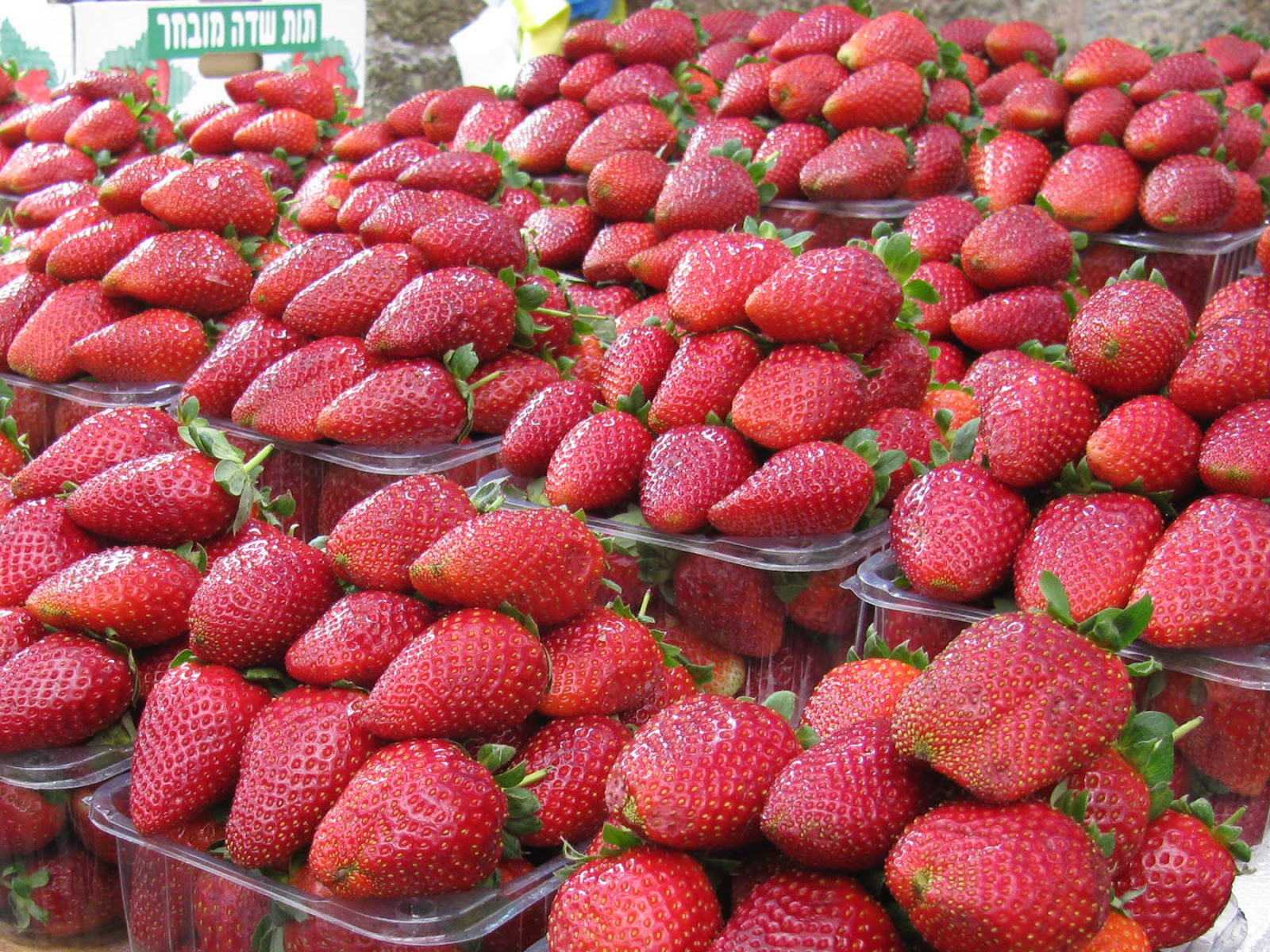
Now, since I am a bit of a history buff, I am going to include a little bit about the market in this post. The Mahane Yehuda market is the largest market in Jerusalem with over 250 vendors selling everything from fruit and vegetables to speciality foods, and clothing to Judaica. The market is a great way to experience a traditional Middle Eastern style shuk, with its fascinating array of sounds, sights and smells.
Mahane Yehuda, which is open every day apart from Shabbat and is particularly busy on Thursdays and Friday mornings, is set between two streets, with two main aisles and then many further small walkways once inside. Just a ten minute walk from the centre of Jerusalem, the market is a fascinating place to stroll whether you are interested just in observing the magnificent sculpted displays of spices and mouthwatering array of foods, or if you want to get involved in real-market buying, negotiating and tasting. In recent years, the shuk has emerged a centre for Jerusalem nightlife, with restaurants, bars and live music. After the Shuk Dash I went with a couple of friends to eat a delicious lunch at Crave, one of the newest culinary fixtures in the market.
Photo credit: Robin Epstein, Around the Island Photography
Photo credit: Robin Epstein, Around the Island Photography

The neighbourhood of Mahane Yehuda was established in 1887 by three business partners - Johannes Frutiger (a German Protestant and owner of the largest bank in Palestine), Shalom Konstrum, and Joseph Navon. It was named after Navon's brother, Yehuda. The newly established neighbourhood of Beit Ya'akov stood nearby. At the end of the 19th century a marketplace known as Shuk Beit Ya'akov was established on an empty lot to the east of the neighbourhood. Here Arab merchants and fellaheen sold their goods to the residents who lived outside the Old City. As the new neighbourhoods outside the Old City grew, the Beit Ya'akov market grew apace with more stalls, tents and pavilions.
Under Ottoman rule, the market expanded haphazardly and sanitary conditions worsened. In the late 1920s, the British Mandate authorities cleared out all the merchants and built permanent stalls and roofing. Afterwards the market began to be known as the Mahane Yehuda market, after the larger of the two neighbourhoods.
In 1931 a new section was built to the west of the market by 20 traders who previously had only temporary wooden stalls in the area. It was later named the Iraqi Market, as many traders of Iraqi Jewish descent acquired shops there.
In the 2000s major renovations were made to the Mahane Yehuda market. A number of trendy shops and cafés began appearing among the market's retail stalls. Non-Middle Eastern restaurants currently include eateries such as "Pasta Basta," specialising in Italian pasta dishes, "Fish and Chips," one, if not the only fish and chips bar in Jerusalem, and "Ha'Agas 1," a vegetarian restaurant.
The shuk also hosts special events like the "Ba LaBasta" happening in 2011, which brought in huge crowds. Guided shopping and cooking tours are aimed at attracting culinary tourists. Also in 2011, the city-sponsored project "Tabula Rasa" (Blank Slate) saw artists being recruited from schools of art and photography in the city to decorate the walls, metal shutters, concrete surfaces and even the rubbish bins of the market.
The market's mixture of shops and restaurants, which includes both kosher and halal establishments, attract residents and tourists, Israelis from Jerusalem and other parts of the country, rich and poor, young and old, religious and secular, Jews and non-Jews, including members of the Arab community. An estimated 200,000 people visit the shuk weekly.
Before each Jewish festivals thousands of shoppers shop in the market for foods based on different holiday traditions: everything from pomegranates, dates, lulavs and etrogs, and assorted honey to fish heads.
Sadly Mahane Yehuda was a target for terrorist attacks during the Second Intifada. On 30th July 1997, 16 people were killed and 178 wounded in two consecutive suicide bombings, then in 
2002 a female suicide bomber detonated at the entrance to the market, killing 6 and injuring 104. The market was heavily guarded for years afterwards.
Back to the Shuk Dash. Israel ScaVentures have Scavenger Hunts all around the country, including Jaffa, Safed, Zikhron Ya'akov and more. The Shuk Dash, whilst definitely being more interactive than educational, was great fun and was a terrific way to see and get to know the market.
Tali runs ScaVentures throughout the year. If you want to get in touch with her and join in for yourselves, you can contact her here.

* This post has been shared on All Seasons, The Good. The Random. The Fun., Wordless Wednesday (on Tuesday), Our World Tuesday, Tuesday's Treasures, Travel Tuesday, The Wednesday Link Up and My Corner of the World.

Wednesday, 20 November 2013

ScaVentures in Gush Etzion

I make no secret of the fact that I love Tali Tarlow's Scavenger Hunts. I have already "hunted", with map, pack and source sheet in hand, in Jerusalem's Old City and the narrow winding lanes of Nachlaot. When Tali contacted me to tell me that she had created a new "Scaventure" in Gush Etzion, a group of communities located in the Judaean Mountains directly south of Jerusalem and Bethlehem, it was just a matter of me saving the date. There was no way I was going to miss it!
This hunt was a family affair. Unlike the other hunts which I had completed by foot, this time my whole family joined me to explore Gush Etzion by car, jumping in and out of it to find the clues and see the sites. My kids thought we were on HaMerotz LaMillion, Israel's version of The Amazing Race. It was actually our first real visit to the area and was exciting for us all to discover the ancient relics and modern settlements of the Gush. 
We started the day in Kfar Etzion, an Israeli settlement and religious Kibbutz re-established in 1967. A sound and light show told us the harrowing story of the original Kibbutz and its fall in 1948. With our hearts in our mouths we set off on our allotted route (so that the various teams driving around the area do not arrive at the same point each time), eager to learn and equally eager to have fun.
Our first stop was at the original kibbutz Masu'ot Yitzhak. Founded in 1945 by young pioneers from Hungary, Czechoslovakia and Germany, it was captured and destroyed by the Arab Legion in 1948. We stopped by the spring at Ein Yitzhak, a centre point to many hikers in the area, and the boys had time to cool off (above). We saw the water tower at the Gush Etzion regional centre and learnt the story of the Alon HaBoded, the Lone Oak, a 14 metre high oak tree which between the War of Independence (1948) and the Six-Day War (1967) was the only sign of the destroyed communities of Gush Etzion. Today it stands tall and proud and has become the symbol of the Gush Etzion regional council.
We followed Derech Ha'avot, the Patriarchs Route, which was the route frequently travelled by Abraham, Isaac and Jacob as mentioned in the bible, then returned to modern times with a stop-off at the truly wonderful Pina Chama, the Cosy Place. Set up in 2001 in memory of two locals who were murdered by terrorists, Pina Chama is a refreshment station for soldiers and police serving in the area and is manned entirely by volunteers. There are usually more than 200 soldiers coming in over the course of a day and most of them say that doing miluim, or duty, in the Gush is worthwhile because of this wonderful station.
We'd been on the go for several hours and the last stop of the day at the Biyar Aqueduct was a welcome one. Torch in hand and trousers rolled up high, we entered the 2000 year old water channel built to take water to Jerusalem from springs in the Hebron hills. Using only the force of gravity, the aqueduct was an amazing engineering feat. From the entrance we followed our guide south and wiggled our way through water and mud. The youngest son was in his element!
Another Scavenger Hunt had come to an end. I think that this was perhaps my favourite... but then I say that every time! Certainly the kids had fun and they'd learnt so much along the way. Even Mister Handmade in Israel was enthusiastic!
Tali runs ScaVentures throughout the year. If you want to get in touch with her and join in for yourselves, you can contact her here.

Sunday, 18 November 2012

Scavenger Hunting in Nachalot

Remember when I went scavenging around Jerusalem earlier this year? Well, Tali Kaplinski Tarlow and the rest of the Jerusalem Scavenger Hunts team kindly invited me back again, this time to explore Jerusalem’s Nachlaot neighbourhood.
Nachalot is actually a cluster of neighbourhoods in central Jerusalem, and is known for its narrow, winding lanes, old-style housing, hidden courtyards and many small synagogues. The neighbourhood was established in the late 1870's outside the walls of the Old City, which was becoming increasingly overcrowded and unsanitary. Sir Moses Montefiore, one of the most well-known supporters and benefactors of Israel in the 19th century, was involved in the building of Nachlaot, and the Mazkeret Moshe ('Memorial to Moses') and Ohel Moshe neighbourhoods were named after him.
After a short introduction from Tali about the Scavenger Hunts, and specifically about Nachlaot, we divided ourselves up in to teams and were given a Mission Pack, including a source book, map, instruction booklet and notebook. Our job was to solve the various tasks and clues set for us in the book. The answers were to be found in the street names, buildings, street art and signs all around us.
My team included Robin, a talented photographer, and two writers, Miriam and Laura. We had a great deal of fun together, though I may as well tell you now that we didn't come in first. We did better than last time though - we weren't last! Actually the whole competitive thing kind of passes me by. I prefer to take my time and learn about the area, rather than rushing to win. I guess I must be getting old!
As we moved from station to station along the hunt's route, we learnt about the families who lived in the area, as well as famous personalities who grew up there. Nachlaot was at once home to Yitzchak Navon, a playwright who would go on to become Israel’s fifth president, as well as various members of the Banai family, a family celebrated here in Israel for producing several famous performers and musicians.
We got lost once but Tali was around and about and helped us get back on track. We counted the old stone cisterns that once served as each community’s primary water source, and checked out the prayer times on one of the larger synagogue's boards. We talked to an actor who turned out to have no connection to the hunt whatsoever, though we had assumed otherwise, and we donated a few coins to charity as one of our set tasks.
All in all the Nachlaot Scavenger Hunt was really enjoyable. Anyone who wants to really discover Jerusalem, in this case specifically Nachlaot, should definitely give it a go.
To round off the whole event, we were provided with delicious vegetable soup and rolls, courtesy of the Village Green vegetarian restaurant, whilst Tali closed the morning's activities with a short talk about the places we had visited. Afterwards I hopped on over to Nachlaot's next-door neighbour, the Machane Yehuda Market (more commonly known as “The Shuk”) to purchase freshly baked rugelach and other treats for the oncoming Shabbat. It was certainly not a bad way to spend a morning...

Sunday, 5 February 2012

Scavenging around Jerusalem

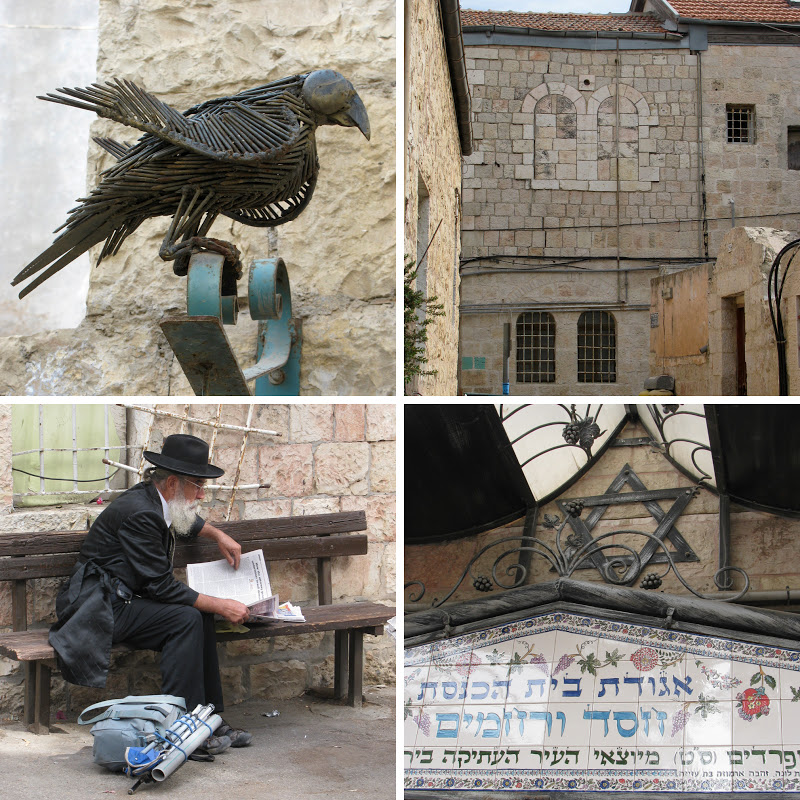
My usual Friday morning activities include cooking for Shabbat, perhaps a little shopping and there's always an errand or two to run. This last Friday morning my routine changed. This last Friday morning I was delighted to be invited to take part in a Jerusalem Scavenger Hunt for bloggers. Fortunately, after a week of rain and grey skies, the sun came out as we drove towards Jerusalem and, arriving at our designated meeting point in the Jewish Quarter of Jerusalem's Old City (in Hebrew known as HaRova Hayehudi or the Rova), I knew that I was in for a fun morning!
Tali Tarlow, the brains behind the Scavenger Hunts, believes that "there is so much to see and do in Jerusalem that the best way to “see and do” it is with your eyes, feet and hands, along with your hearts and souls!". She believes that the Scavenger Hunts are educational and fun for groups of all ages and I can say right now that I totally agree with her!
The twelve bloggers invited along to the hunt were divided into teams of four and given a pack which included a source book, a map, instruction booklet and notebook. We then set off to scavenge around places of interest in the Jewish Quarter, many of which, even after over 17 years living in Israel, I had never seen before.
Along the way we stopped to learn how a simple cleaner in a Beit Midrash (House of Learning) became a famous and revered Rosh Yeshiva (the title given to the dean of a Talmudical academy) known as Rashash HaKadosh - almost overnight, and heard the heart wrenching tale of 10 year old Nissim Gini, wounded in the battle defending the Old City of Jerusalem on May 27th 1948 and who sadly became Israel's youngest victim killed in action. We saw some beautiful buildings and some yet to be restored, and learned the history of the Broad Wall, built by King Hezekiah (late eighth century BCE), through Rami, the owner of the Makolet (corner store), who’s shop lies just opposite the wall.
It took most of the bloggers about two hours of exploring to answer all the questions and find all the stations listed in our booklet. Okay, so I admit to being in the team which came in last! My husband laughed out loud when I told him so. He was sure that I had made my group read every sign and not leave any stone unturned, apparently as I do with my kids. Whoops!
The instruction booklet we had been given at the start of the hunt was incredibly clear and, though it really would have been quite hard to get lost, Tali was at the end of her mobile phone if we needed her. The tasks at each of the eleven stations in our hunt were suitable for all ages - great for school age kids and upwards, though perfect for our adult group too - and the route itself was very self-contained, making everything accessible to an older age group as well.
We knew we were running somewhat late when Tali called to see where we were. Unfortunately that meant rushing our last two stations a little because we knew that the rest of the group were waiting for us at the final stop, Batei Machse Square, in front of the Rothschild House (financed by Baron de Rothschild to house the influx of Eastern European refugees in 1871). Tali and Jeremy, our guides for the morning, were there to meet us and to answer any of our questions. Tali reassured us that time was not important, that she was delighted we had not felt the need to rush.
The morning's activities closed with a short talk from our guides about the places we had visited and a brief history of the area. We'd all had a fantastic time and enjoyed meeting some new friends as well. Personally I cannot wait to take my own kids - and Grandpa too - on a Jerusalem Scavenger Hunt. I know that the kids will learn so much from the experience, without it being a "boring tour" (their words, not mine!), and they're sure to have a lot of fun along the way.