Thursday, 1 September 2016

Cyprus - Part II

Cyprus is known for its beaches and watersports and we had a marvellous time in beautiful Latchi, a Greek Cypriot village on the Akamas Peninsula, renting out a speedboat and taking it out to the Blue Lagoon, a popular bay. The water was warm - in summer it’s up to 30°C - and the sandy bottom gave the sea a magical turquoise colour. There was also a fair number of fish, and lots of shells and other aquatic life on the sea bed. My youngest son - the daredevil in our household - tried out parasailing and loved it. Now I wish I'd tried it too!
But Cyprus is far more than a lazy beach-time resort. Cyprus is a small island with a vast amount of history. There were ruins to wander through, villages with churches on every corner to explore, and a capital city, divided in 1974 when the Turkish army occupied the northern third of the island, to visit.
The Neolithic settlement of Choirokoitia, situated on the slope of a hill towards the southern coast of the island, was so interesting. We explored its circular stone houses and archaeological remains dating back to 7,000 BCE, whilst learning about the inhabitants of the ancient farming community. Lefkara, a village famous for its lace and silver handicrafts, was so very picturesque with narrow, winding streets and traditional architecture of old, terracotta-roofed houses.
I am finding it hard to put into words how wonderful our short stay was at Aperanti Agrotourism, the traditional agrotourism accommodation we found in the picturesque village of Pera Orinis. The accommodation was absolutely beautiful and our hosts, Sara and Tassos, were fantastic and made us feel very welcome. We spent a great deal of time chatting with them about life in Cyprus and they spent each morning helping us plan the day ahead. We would happily return!
The Xyliatos Dam, located in a magnificent green valley, was beautiful, but even more impressive were the Troodos Byzantine churches that have such significant historical and artistic value that UNESCO included them in its list of World Heritage Sites. All ten churches are located in the Troodos mountain range and date from the 11th to the 17th centuries. We visited three of them.
Then of course we visited Nicosia, or Lefkosia (South Nicosia) and Lefkoşa (North Nicosia) as it is known officially and to Greek speakers, the world's last divided capital. The barbed wire and guard towers of the Green Line cuts the town in two, with the northern side being the capital of the self-proclaimed Northern Cyprus and the southern half being the capital of the Republic of Cyprus. Wandering around the Old City was an interesting experience in itself, although some buildings, especially those near the Green Line, were derelict and crumbling.
We had two more days left of our holiday which we spent visiting yet more Troodos mountain villages and monasteries. and canoeing on the Tamasos Dam... as one does! Our very last night in Cyprus was spent at the Santa Maria Festival in the village of Deftera. The Assumption of Mary into Heaven was certainly a new thing for this Jewish family to be observing, but it was fun to watch the locals - and to see the tremendous queues into the neighbourhood church - whilst sampling some of their local treats. The delightful fishing harbour of Liopetri was our very last stop, but gosh, I hope to be back in Cyprus one day. After all, it is so very close by.

* This post has been shared on Blue MondaySeasons and Scenic Weekends.

Monday, 29 August 2016

Cyprus - Part I

The distance from Cyprus to Israel is 224 miles (360 kilometres), with an approximate travel time from Jerusalem, Israel to Nicosia, Cyprus of 41 minutes. Goodness knows why it has taken us so many years to visit the country when we live so close by! We put it right this summer and just recently returned from a fabulous holiday in Paphos and the delightful village of Pera Orinis, near Nicosia.
I am going to give you a taste of our trip, though believe me, it was very hard to whittle down that 'taste' to a few photos that I feel sum up our holiday! We had a fantastic time exploring cobbled village lanes, walking on beautiful pebbly beaches (my kids will tell you I am not a great fan of sand!), visiting beautiful monasteries and churches, and eating delicious fish in local village tavernas.
We went on an "Akamas" tour where we started the day with a walk into the Avakas Gorge in Cyprus's Akamas Peninsula, then visited Lara Bay and the Turtle Conservation Sanctuary for endangered green and loggerhead turtles. We then drove north, through the Akamas Peninsula National Park and through some beautiful villages, visiting the Baths of Aphrodite and then going for a swim in the clear blue sea.
Another day we stopped to admire the view at Petra tou Romiou, also known as Aphrodite's Rock, a sea stack in Paphos, then strolled through the desert-like landscape of the Tomb of the Kings. The mosaics at Nea Paphos were absolutely beautiful, though I would suggest visiting very early in the morning or late afternoon - it was hot!
For a change of scene we ventured into the Troodos Mountains, the largest mountain range in Cyprus. The mountain village of Omodos, the wine centre of the inland region, enticed us with its colourful, cobblestone square, narrow alleyways and wood crafted verandas overlooking the streets. Lace making and embroidery is a 2,000-year-old Cypriot tradition, so beautifully crafted lace pieces were in every local shop.
Cyprus's countryside, archaeological sites, sporting activities and shimmering blue sea really got to us, yet there was more to see of the divided island...

Monday, 22 August 2016

Ein Afek Nature Reserve

Last month Mister Handmade in Israel and I went up north for a few days whilst the boys were at summer camp. Now, you might have guessed by now that I am not the type to sit and sunbathe for days on end. When we go away I like to see the area we are visiting, and this little holiday was no exception. We visited some lovely places, all of which I will blog about at some point, but this post is about Ein Afek Nature Reserve, also known as Tel Kurdani (from the Arabic word kurdan, which means valuable jewel), a lovely spot next to the town of Kiryat Bialik.
The site of the Ein Afek Nature Reserve is what remains of the biblical town of Aphik, which is mentioned in Joshua 19:30 as belonging to the Tribe of Asher. The Ein Afek Spring is in the reserve (afikim means springs in Hebrew), and the reserve is also the last remnant of the Na'aman Stream swamps. In winter, when the water level rises, the reserve shelters pelicans, cranes, pygmy cormorants, grey herons and many other species of water fowl, and in spring the reserve is carpeted with flowers. Ein Afek also has a myriad of bird life, fish, turtles, terrapins, snakes, lizards, otters, coypu and more. Admittedly it was a little warm hot on the day we visited, but there was still plenty for us to see and enjoy.
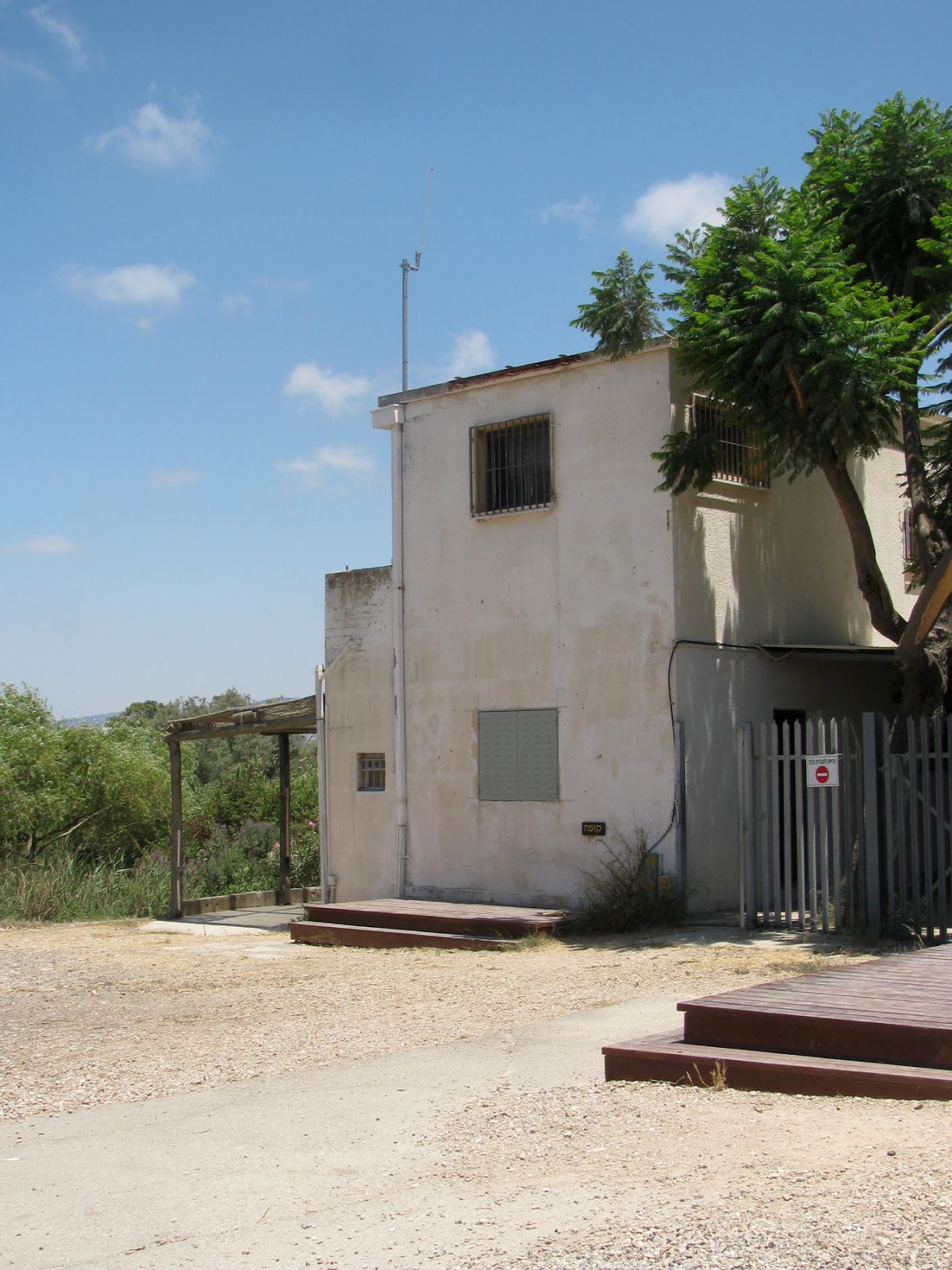
One of the highlights of the reserve is the two-storey fortress, top, that dates back to Crusader times. An audiovisual presentation in the building showcases the reserve’s flora, fauna and heritage, and the roof provided us with a magnificent view of the surrounding area and, on the flip side, all the development around. A water-powered flour mill operated on the lower floor of the fortress and the ground flour was shipped to nearby Acre in boats via the Na'aman Stream.
We followed the walking trail from the fortress, passing the Mezuda (Fortress) Pools and a dam built during the Crusader period. Vegetation thriving in the Ein Afek wetlands include gibbous duckweed, blue water-lily and pondweed. Watercress can be spotted at the water's edge, while typical riverbank flora includes tamarisk trees, blackberry hedges, reeds, and bulrushes. Crossing over wooden bridges, we were able to experience nature and her water in its many forms – swamp, springs, pond, flowing stream and leafy meadow.
In 1991, seven water buffalo were relocated from the Hula Nature Reserve to Ein Afek and placed in a pen with electric sensors, to prevent them from wandering into the swamp. We spotted them in the distance sheltering under a tree, above. In the past, before the Na'aman swamps were drained as part of preparation of the land for cultivation and to rid it of malaria, herds of water buffalo brought from Egypt lived in the area. They served as work animals and provided milk for Bedouin families. Today the buffalo's grazing load curbs the growth of trees and maintains open pasture. 
The largest body of water at Ein Afek is "The Great Lake". A beautiful wooden walkway stretches above the lake, below. Along the way we viewed aquatic plants, birds and fish. The walkway then lead us past the Meshushim (Hexagonal) Spring, which got it's name from the shape of the structure built around it during the British Mandate. A permanent resident of the area is the river crab.
Next was the Suphia (Moorhen) Pool, a small constructed pool where many water and brush birds nest, followed by five tiny pools, the Zeitzer Pools, which are separate from the other bodies of water in the reserve. Zeitzer was a pioneer from Hungary who leased land at the edge of the swamp in 1930 and dug fish ponds. He imported carp from Yugoslavia and continued to raise them till his death in 1945. The remains of his ponds can be seen here. They were a beautiful blue colour, quite different to the somewhat murky waters of the reserve.
Finally, the Eshel (Tamarisk) Pool was built during the British Mandate in the 1930's. It channelled water to the pumping station, which can be seen at the end of the trail, and from here the water was diverted to the oil refineries built north of Haifa. This continued till the 1960's.
The walking trail finally lead us to an ancient tel dating back 4,000 years (the Canaanite period). In ancient times people chose to settle on sites higher than their surroundings in order to protect themselves. They also chose places close to water and which had arable land. Tel Afek met all these requirements. A number of archaeological surveys have been carried out on Tel Afek. Human remains, pottery vessels and tombs have been found. From the top of the tel we went back down the path to the swamp, and returned to the reserve offices where we had started.
Ein Afek was declared a nature reserve in 1979 after drilling in the area nearly caused all the springs to dry up. Now pumping is limited and in years with little rainfall water is pumped into the reserve to preserve the unique vegetation of the area. The reserve covers 366 dunams. A supplementary 300 dunams were added in 1994. We thoroughly enjoyed our visit there!