Monday, 9 August 2021

Recipe Cards

The very talented Ella of Ella Bakes got in touch. She had an idea that she wanted to discuss with me. Her sister was moving out and she wanted to get her some baking items and write her a recipe card for several favourite recipes. She wanted to know if I could make the blank cards for her to write each recipe on. 
She had ideas of me decorating each card with a little paper version of each of the baked goods she was writing the recipe for. She was happy for me to come up with a suitable design. "I just want them to be beautiful and I know that's what you do!" she wrote 😊. There were to be seven cards, each one A5 (148 x 210mm) in size.
The first card I put together was for challah, the plaited bread typically eaten on Shabbat and Jewish holidays. I made my own little paper versions, adding little packets of yeast and flour and some eggs to the design.
Next up was Rocky Road, which I believe is similar to the Tiffin Cake that I love to make. This time I cut out a teeny tiny chocolate bar and some marshmallows, then created some yummy looking pieces of the milk chocolate, biscuit and marshmallow filled treat.
Ella wanted to share with her sister how to make the very best chocolate chip cookies. I crafted some tiny cookies and added a wooden spoon, spatula and an oven glove to the design. The cookies looked good enough to eat!
Next came brownies, those moist and gooey baked treats! I created a paper version of the square cookie (the brownie is classified as a bar cookie rather than a cake) and added a whole tray of it too. Some chocolate squares added the finishing touch.
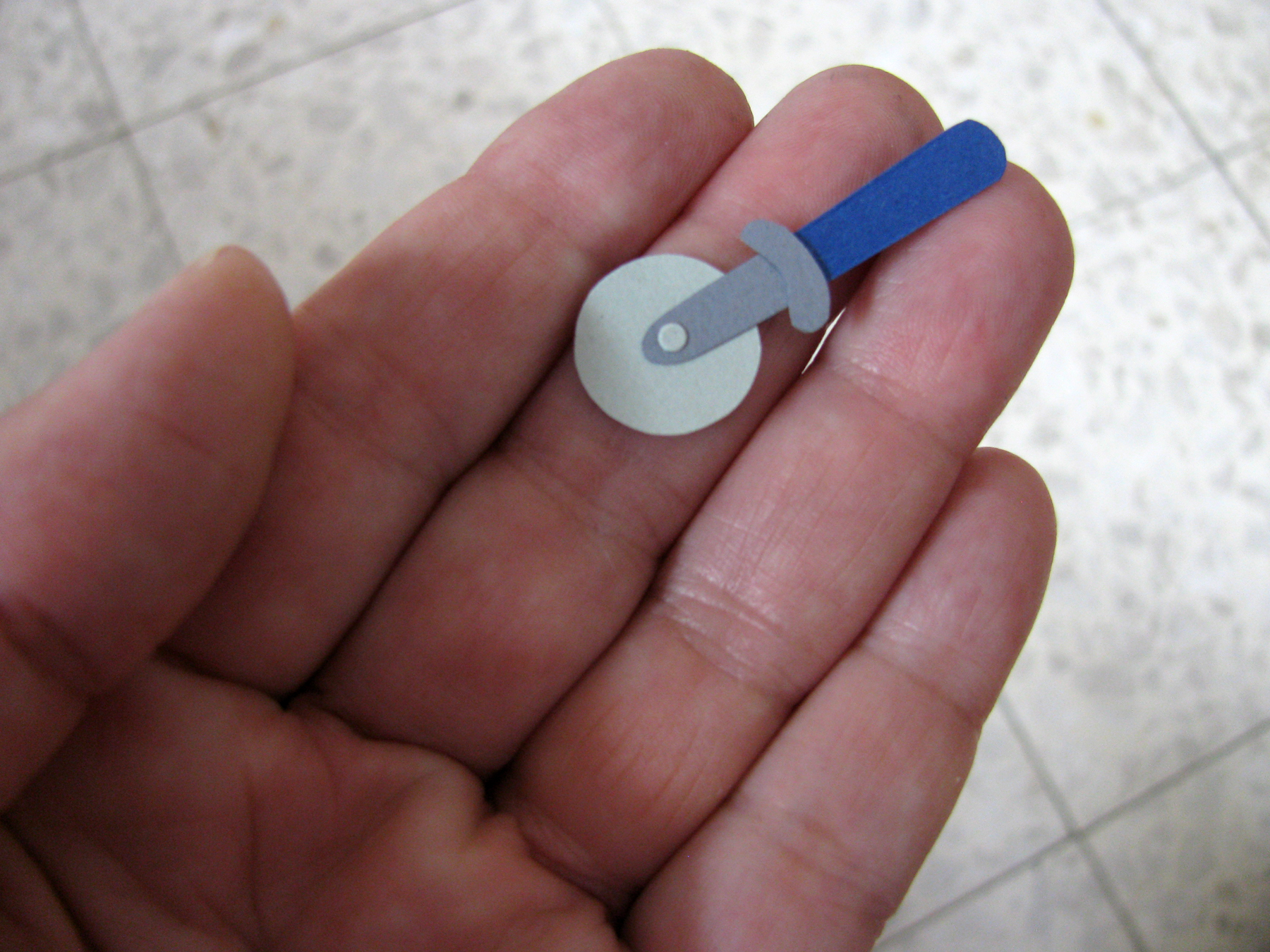
Pizza was also on Ella's list. I had fun creating some paper versions of the Italian dish, adding toppings of cheese, tomatoes and pepper. I had the most fun creating this tiny pizza cutter, below.
The last two recipe cards were for Amsterdam cookies and crêpes. I initially thought that Amsterdam cookies were somewhat illicit but it turned out that I had got it all wrong! They are actually stuffed cookies with a surprise nugget of white chocolate hidden inside. These cookies are best enjoyed warm while the centres are still melty. Yum! I added the flag of Amsterdam to this recipe card. It depicts three Saint Andrew's Crosses and is based on the escutcheon in the coat of arms of Amsterdam.
The recipe card for crêpes, below, showed a triangular folded version of the pancake-like pastry drizzled with chocolate. I added a mini frying pan, eggs and flour, just some of the ingredients needed for these delicious thin treats.
Ella was very excited to see the finished cards. I was concerned that all the little paper creations might not be so suitable for kitchen use, but she said that she didn't mind the cards looking worn after time, it shows that they're loved! In the meantime she is going to put them into clear plastic wallets, in a binder, so that they can be taken out and admired.
"They look amazing. Thank you so much!" she wrote to me. I hope that her sister enjoys using each card. So much love went into them!

Thursday, 5 August 2021

The Medals on His Chest

The customer who ordered this anniversary card for her husband also wanted a birthday card for her dad. She sent me a photo of the smartly dressed gentleman and asked me to base the card on that picture. The medals dad is wearing all mean something, she told me. I needed to get them just right! In addition, dark chocolate and weights were requested in the background.
I have shown her 87 year old dad wearing his black army beret and proudly displaying his war medals. I carefully cut out photos of each medal for accuracy and then added the relevant colour ribbon. Above his medal is a red poppy, the enduring symbol of remembrance of the First World War. Poppies are worn as a show of support for Britain's Armed Forces community and are sold in honour of Remembrance Day. The flowers were a common sight on the Western Front and grew on the battlefields of Flanders, flourishing in the soil churned up by the fighting and shelling.
My customer was thrilled with her dad's card. "The card is fantastic. Absolutely amazing!" she wrote to me. I have made many cards for young men and women about to enter the Israel Defence Forces, but this was, I think, my first for an old soldier.

PoCoLo

Monday, 2 August 2021

The Hula Nature Reserve and Rosh Pina

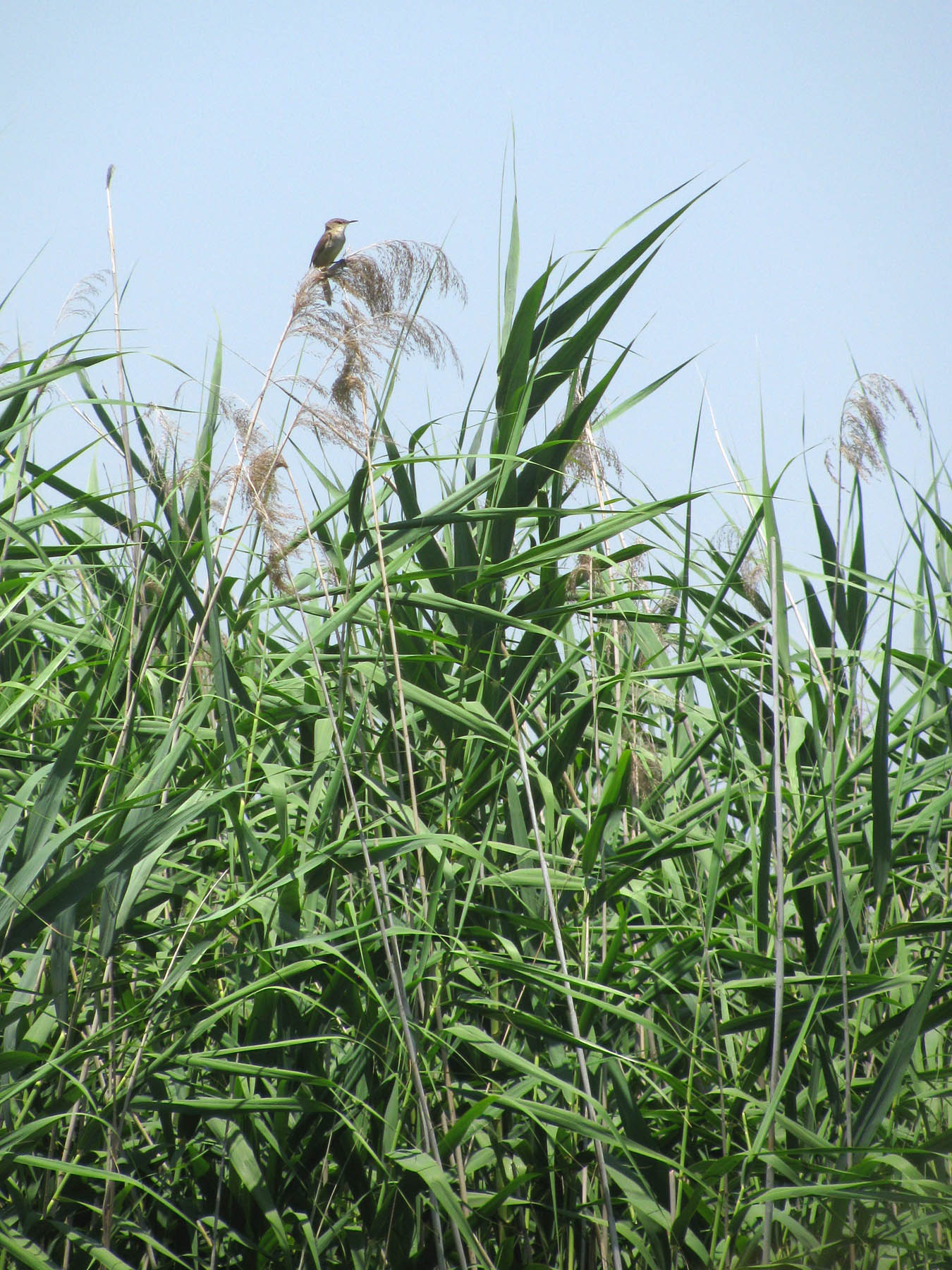
We made a return visit to the Hula Nature Reserve back in May. We were last there in 2015 and the site was just as beautiful as I remembered it to be. The reserve is a site of world-wide importance for water birds and is an important wet habitat in the Middle East. From March to mid-April hundreds of millions of exhausted birds land in Israel, after several days of crossing the Sahara Desert and the Sinai Peninsula. Though May was perhaps a little late for the spring migration, we spotted quite a few birds and some other local wildlife too.
The Hula Nature Reserve was declared in 1964. It was the first nature reserve established in Israel and is the last remnant of the Hula lake and marshes. It was drained in the 1950s because the lake and the marshland surrounding it were a breeding ground for mosquitoes carrying malaria. The land was converted into cultivated fields. A small section of the valley was later re-flooded in an attempt to revive a nearly extinct ecosystem. Today the reserve is home to a broad range of waterfowl and other animals, some of them endemic to the reserve (in particular the Hula painted frog, which was thought to have become extinct, but was rediscovered in 2011 and is now considered to be one of the rarest animals in the entire world).
We started the kilometre-and-a-half long trail through the reserve at the Hula Valley lookout point. There we enjoyed a wonderful view of the reserve and its immediate vicinity - the Hula Valley, Ramot Naftali and the slopes of the Golan and Mount Hermon. Continuing on we passed a marsh area where papyrus and common reed were growing in profusion, before reaching the floating bridge, a 600 metre long covered platform which acts as a concealed hide over the lake.
The Hula Nature Reserve is identified especially with both migratory and wintering birds, the most prominent among them being pelicans and cranes, who spend the winter months in Israel. The nests of other water birds have been found within the boundaries of the reserve, including nesting colonies of five species of egrets and herons, and other bird species. Some of these are endangered species, both in Israel and all over the world, while other species in the reserve are regular nesters.
Besides the water fowl, an assortment of mammals live in the reserve, including the wild boar, otters, the swamp lynx and the invasive rodent nutria, also known as the coypu, which threaten the local inhabitants. There is also a variety of insect-eating bats in the reserve and water buffalo graze in certain areas to preserve the open meadows.
After quite some time, we left the floating bridge and continued our walk towards the observation tower, a three-storey tower which gave us a terrific view of the marsh and the lake. We were able to sit and observe the birds, including a beautiful bright blue Kingfisher which flew to and fro across the water. 
Though only a very limited part of the reserve has been made accessible for visitors, we still thoroughly enjoyed our visit but soon it was time to move on. I wanted to show the friends we were with the nearby town of Rosh Pina. Mister Handmade in Israel and I stayed there back in 2015 and I made a more recent return visit in 2019, but it is one of those places that is always lovely to go back to again and again.
Rosh Pina, which means "cornerstone" (from Psalms 118:22), is one of the earliest Jewish agricultural settlements. It was first founded in 1878, when 18 religious Jews from Safed walked 90 minutes to this area, hoping to start farming with the help of three natural springs, and live off the land as farmers rather than off handouts from European Jewish communities. They knew little about farming, however, and the experiment, which was called Gei Oni ("Valley of My Strength"), failed.
A second, more successful effort to develop a settlement began in 1882, with the arrival of a group of mostly new immigrants from Romania and Russia. The newcomers purchased land from local Arabs  and, although they too had to overcome massive hardship and depend for some time on the financial support of the Rothschilds, they eventually became independent and created the town that exists today.
Our first stop in Rosh Pina was at Nimrod Lookout, a gorgeous observation point which is part of the memorial site to Nimrod Segev, who was born in Rosh Pina in 1977 and fell in 2006 in the Second Lebanon War while on reserve duty. The beautiful views seen from the high Nimrod Lookout are the sights Nimrod viewed throughout his life: the Hula Valley, the Golan Heights and Israel's tallest peak, Mount Hermon
Next, we strolled into the centre of the old town, stopping to check out the various ceramic studios and art galleries. We looked through the windows of the small synagogue, Rosh Pina's first public building, and then at the various historical houses, including the home of Gideon Mer, an Israeli scientist whose work was mostly concerned with the eradication of malaria around the swampy Hula Valley. Thanks to his research, the malaria epidemic among settlers in the region and beyond was contained.
We walked back to the car through the Baron's Park, a small wooded area with stone steps reportedly modelled on the grand gardens at Versailles, though it is a little hard to imagine! Our next stop was Safed, one of Israel's holiest cities and also the highest city in Israel. I will tell you all about it in another post.