Thursday, 3 March 2022

Egrof Varomach Memorial, Kula Forest

The Egrof Varomach ("Fist & Lance") memorial for the 147 fallen soldiers of the 27th Brigade (later the 60th and 204th Brigade) can be found in the Kula forest. The brigade was founded in 1952 as the first reserve armoured brigade in the Israel Defence Forces (IDF). They took part in many battles, including the Sinai War, the Six-Day War, the War of Attrition, the Yom Kippur War and the 1982 Lebanon War, until the brigade's dissolution in 2014.
The memorial site includes two half-tracks and an AMX-13 tank which was damaged by the Egyptians during the Six-Day War. It was originally erected near Refidim in Sinai and in 1980, prior to the evacuation of Sinai following the peace agreement between Israel and Egypt, the monument was moved to the outskirts of the Kula Forest. Following road construction 500 metres east, the monument was renovated ahead of Israel's Remembrance Day in 2018.
A path with the green and black badge of the Egrof Varomach brigade on both sides leads to the memorial site. At this site, a wide plaza is enclosed by a fence and there is a large seating area. Beside the half-tracks and tank, there is a sign with details in Hebrew and English about the brigade and the battles in which it participated. Above the sign is the badge of the unit, at the top of which is the word Yizkor, "Remember". A memorial wall bears the names of  the fallen.
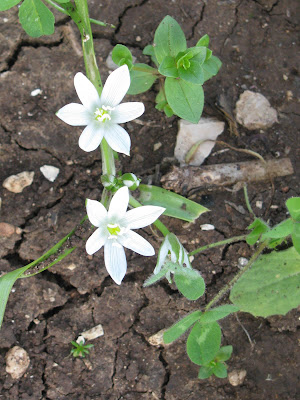
The Kula forest offers another memorial, nature, ruins and even a Roman mausoleum. We last explored it in August 2020. This time, after visiting the Egrof Varomach memorial, I had a lovely time photographing the early Crown anemone and Persian cyclamen, which were just beginning to bloom. I also spotted Arisarum vulgare, or Friar's Cowl, an unusual-looking wildflower which is a member of the Arum family and occurs in the Mediterranean region from October through until March.
There were just a few beautiful anemone, or calaniot in Hebrew, to be seen. A few weeks later and no doubt the fields are now covered with magnificent carpets of bright red, with the odd white, purple and pink head scattered between them. Anemone have a symbolic place in Israeli culture as well as a natural one. During the time of the British Mandate, the term was attached as a nickname to the British soldiers, due to the bright red colour of their berets. A song about the flowers, written by the Israeli poet Nathan Altermann in 1945 and made famous by the Yemeni-Israeli singer Shoshana Damari, then became used as a protest song against the British. The song, about the life of a young girl and about anemones which are always blooming all her life long, is one of the most played, performed, loved and cherished songs in Israel today.
The Persian cyclamen, or rakefet in Hebrew, is one of the popular winter flowers in Israel. It is a delicate flower, but it can grow almost anywhere, even in rocks and shady forest groves. Cyclamen bloom throughout late winter and into spring, adding a touch of beauty to cool-weather hikes. They range in colour from pale pink to deep purple. Its petals grow upward instead of outward, so the flowers look like they're stretching up to the sky. It is said that King Solomon saw the cyclamen as the model for his crown, and one of the Hebrew nicknames that has stuck to it is "Nezer Shlomo," King Solomon's crown. The tubers at the root of these cyclamen plants have historically been used to make soap.
The Palestine iris, or Iris eretz Israeli, below, is a white to yellowish flower, though in the south of Israel, light blue specimens can be found growing in the warm dry conditions. It is a low-growing plant rising to a height of 13cm. The fragrant flowers are short-lived, produce nectar and are known to bloom in the morning. It was first found in Mesopotamia, part of Syria, and has been used as a medicinal plant in the Middle East for urinary tract infections by boiling the leaves or the rhizomes in water.
The Kula forest, which was planted in the 1950s, actually has three names. The first name, Kula, is after the Arab village of Quleh which once existed in the western section of the forest. It was deserted during the 1948 War of Independence and the ruins of crumbled houses and terraces now lie among the trees. The forest is also know as the Koah Forest or Forest of the Kaf Het. In gematria (a Jewish form of numerology in which the letters of the Hebrew alphabet are substituted with corresponding numbers) Koah is 28. 28 soldiers from the Alexandroni brigade died in a battle on the 15th July 1948, when Jordanian forces with tanks returned to the conquered Quleh village and killed 28 Jewish soldiers. The village returned to Israeli control on the 18th July. The name Koah commemorates the soldiers. Finally, it is also known at the Elad Forest since it is located by the city of Elad, which was established in 1990.
After exploring the area of the forest near the Egrof Varomach memorial, we crossed the road and parked near the Alexandroni memorial, above. At the memorial we found a short description of the battle that occurred during the War of Independence, when the IDF and Arab Legion forces fought over the village. A monument with the names of the fallen engraved on it is located on top of a hill and, if you look down below, you can see the remains of trenches the fighters used during the battles.

PoCoLo

Monday, 28 February 2022

'Aleph' is for Ayelet

It's been quite a while since I posted one of my Hebrew letter papercuts and this one is a tiny one! My good friend Ayelet was celebrating her 50th birthday. A group of us got together to mark the day and, rather than buying a group gift, our brief was to give Ayelet something that could fit into a matchbox! I decided that I wanted to make Ayelet a papercut, so that's what she got inside her matchbox, along with some sweet photos of our children together from over the years.
The Hebrew name Ayelet means deer or gazelle. It starts with the letter Aleph, pronounced ah-lef, and is the first letter of the Hebrew alphabet. It is written as א and spelled as אלף. This letter is actually the source of the Greek letter Alpha, as you can see by the similarities in the two letters' names, and the English letter "A" is therefore ultimately derived from Aleph as well.
In Modern Israeli Hebrew, the letter is sometimes silent (word-finally always, word-medially sometimes: הוא‎ "he", ראשי‎ "main", ראש‎ "head", ראשון‎ "first"). Its pronunciation varies in different Jewish communities.
The root of the word Aleph is also connected to many other words in the Hebrew language. The world "eleph," for example, means a thousand. The word "aluf," which also comes from the same root, means a (military) "general," or a "champion". The letter Aleph has connotations of greatness!
Since the letter Aleph is the first letter in the Hebrew alphabet, it therefore symbolises oneness and unity. In Judaism it is often associated with the oneness of monotheism. Every letter in the Hebrew alphabet also has a numerical value, or gematria, so naturally the numerical value assigned to Aleph is one. You may see this most commonly when the Hebrew year is written out. For example, last year, 2021, the Hebrew year was 5781 - תשפ"א. The Aleph in it represents the one. When an Aleph is used at the beginning of Hebrew years, it means 1000.
The Bible begins with the second letter of the alphabet, bet. There is a midrash (an ancient rabbinic interpretation of scripture) that says the letter Aleph is rewarded by being allowed to start the Ten Commandments. (In Hebrew, the first word is אנכי, which starts with an Aleph.) Aleph is also the first letter of the Hebrew word emet (אמת), which means truth. In Jewish mythology, it was the letter aleph that was carved into the head of the golem that ultimately gave it life. (In Jewish folklore the golem was a creature created by magic, often to serve its creator.) 
Ayelet also received one of my papercut cards on her birthday. I cut out her name in Hebrew letters and added the 50 to mark her age. As I have already mentioned, the name Ayelet means deer or gazelle. The name was taken from the phrase אילת השחר (ayelet hashachar), literally "gazelle of dawn", which is a name of the morning star. The phrase ayelet hashachar is found in the Bible at Tehillim 22:1. The entire verse reads: "la-menatzeaḥ al ayelet ha-shaḥar mizmor le-David."
Other related Hebrew name choices with the same meaning are Aya and Ayala. The masculine form of the name is Ayal.
* I have previously posted about the Hebrew letters Hey, Lamed, Mem, Nun and Resh. You can click on the name to read about each letter.

Thursday, 24 February 2022

A Favourite Photo of Safta and Saba

This particular safta and saba (the Hebrew names for grandmother and grandfather) have been receiving my handmade cards for years. It's become a tradition. In the past I have shown Safta making her wonderful chicken soup and more recently, playing Solitaire on her iPad. Saba's most recent birthday card showed the two of them tucking into their daily grapefruit.
This year their daughter-in-law sent me a favourite photo of the couple and asked if I could recreate it for Safta's birthday card. It was actually a really great photo for this type of project. Safta and Saba's clothes were beautifully coordinated and I was able to create the card using a colour palette of pinks and greys.
I hope Safta liked her card.
PoCoLo

Monday, 21 February 2022

Hair and Makeup

I have been making birthday cards for Eden for a number of years and makeup has been the theme for many of them. This year was no different. Eden's mum asked me to make her daughter a card based on things to do with the makeup and hair course she is currently taking.
Eden's mum told me that she has been working on a dolls head for hair styling. (Who remembers the Girl's World styling head of the 1970s?). She sent me various photos of the doll, which has been named Patricia! Apparently Eden was most pleased with the wavy hairstyle she had created in one photo, so I tried to replicate it on her card.
Eden is learning about makeup as well as hair, though I think she is already super talented in that department. Check out her Instagram page to see some of her amazing creations. I added some bits of makeup - a couple of teeny tiny palettes, lipsticks and a brush - along with a picture of Eden doing Patricia's hair.
Eden loved the card.
* This post has been shared on The Good. The Random. The Fun.
Sticky Mud and Belly Laughs